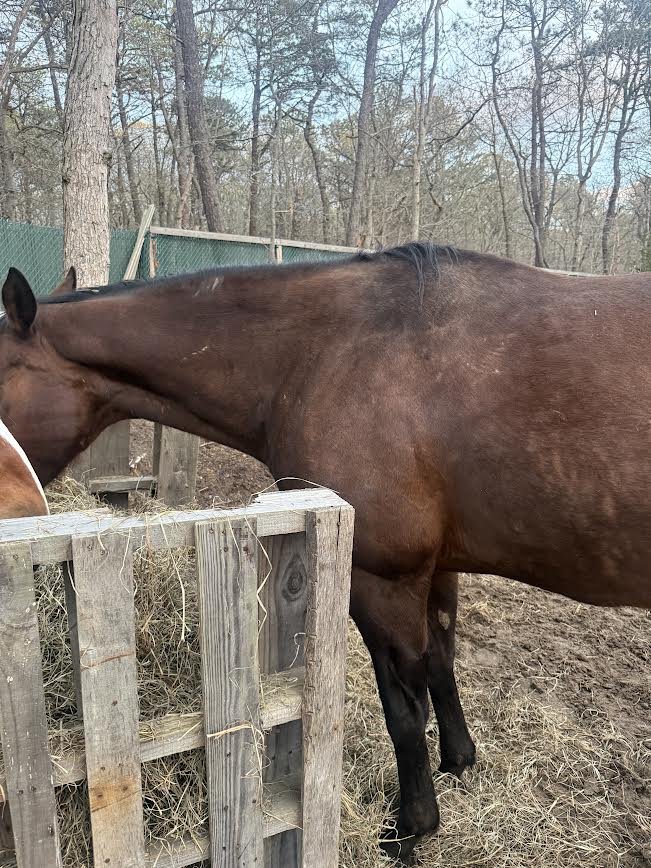
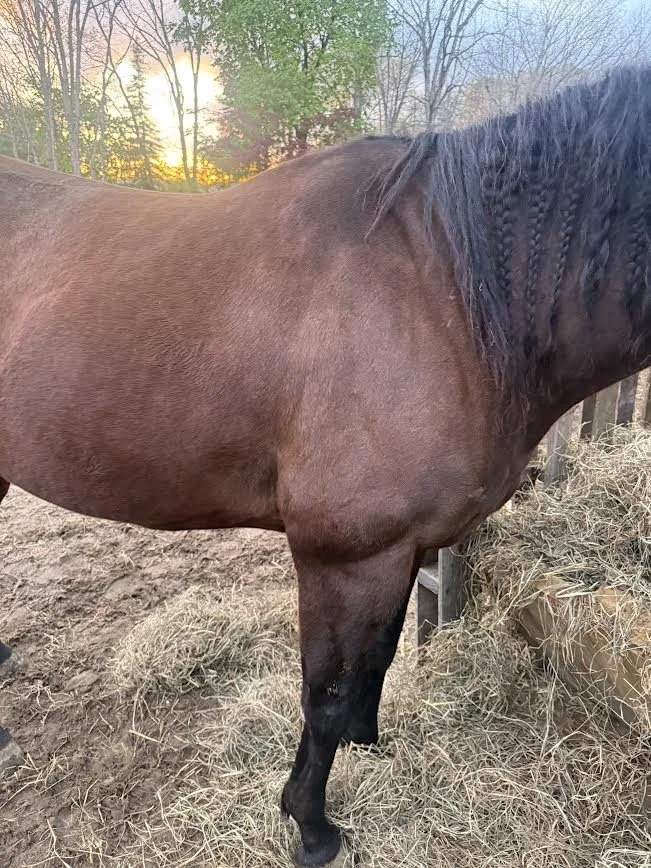
Farrier work is often misunderstood as something that only influences the hoof or the limb below the knee, but in reality, its effects travel through the entire horse’s body. The hoof is the foundation, and any change at that level inevitably ripples upward, influencing movement, posture, and overall balance. When the hoof is trimmed or shod with precision, it allows the horse to land evenly and move efficiently. This directly affects how forces are absorbed through the tendons and ligaments of the lower limb. If the hoof is imbalanced, those soft tissues are forced to compensate, creating uneven strain. Over time, that strain doesn’t stay localized—it travels upward into the joints, altering how the knees, shoulders, neck and back.
Promoting a heel first landing and eliminating distortion through trimming is key. This reduces excessive tension in the tendons and ligaments, allowing them to function elastically rather than defensively. As a result, the horse can begin to “settle” into itself—finding a more natural, relaxed posture without bracing or guarding. This has a profound impact on the shoulder. A horse that lands unevenly will often restrict shoulder movement to protect itself. Once the foot is balanced, the shoulder is free to swing more fluidly, which in turn influences the neck. The neck softens as it no longer needs to compensate for imbalance below, and this release continues into the back. The back is where these changes become most visible. A horse that is uncomfortable in its feet will often hollow or brace through its topline. By correcting the foundation, the horse can lift through the back, engage the core, and move with greater symmetry.
What starts as a change in the hoof becomes a full-body adjustment, allowing the horse to move more freely and efficiently. By addressing balance at the ground level, we influence everything above it, helping the horse achieve a more natural state of alignment and movement.
Before
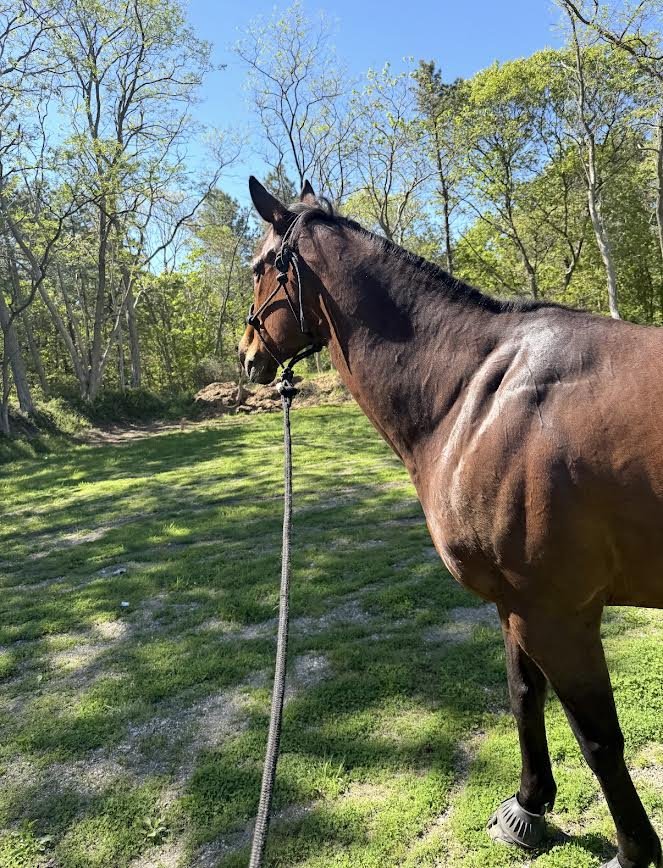
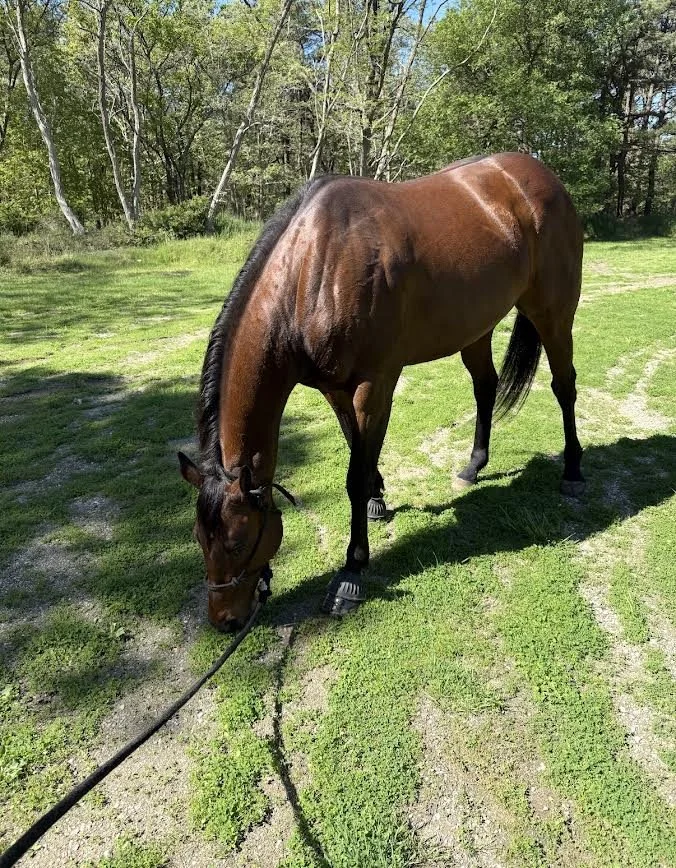
After